
Product image
LeapFrog Letter Factory Phonics
Interactive phonics learning system that teaches letter sounds through songs and activities.
Check price
Preschoolers are ready for more structured learning through play. This is the perfect time for early literacy activities, creative expression, and games that teach turn-taking and cooperation.
At 4-5 years old, children's attention spans increase and they can handle multi-step activities. They're developing early literacy and numeracy skills, learning to follow rules, and building social-emotional competencies.
The best toys for this age encourage creativity, problem-solving, and cooperative play. Look for open-ended building toys, early board games, art supplies, and activities that combine learning with fun.
This page contains affiliate links. As an Amazon Associate I earn from qualifying purchases. Learn more
At ages 4–5, children benefit most from activities that build these developmental skills.
The types of toys that work best for this age group.
Build phonics awareness and letter recognition through playful games.
Develop spatial reasoning and creativity with open-ended building toys.
Encourage creative expression and fine motor development through art.
Learn turn-taking, rule-following, and social skills through age-appropriate games.
Carefully selected toys that deliver real learning value for this age group.
Interactive phonics learning system that teaches letter sounds through songs and activities.
Check price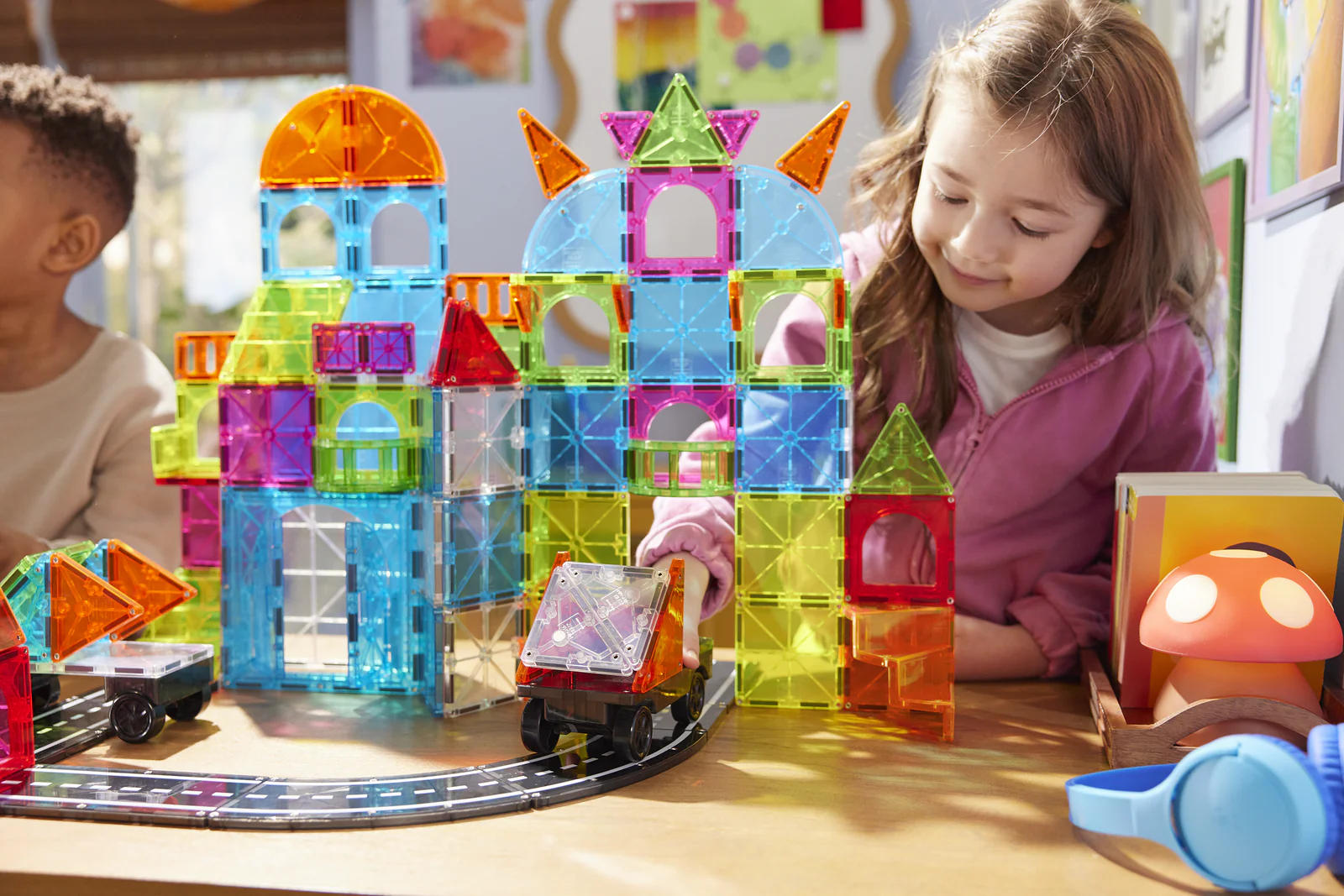
Magnetic building tiles that click together to create 2D and 3D structures.
Check priceCooperative board game where players work together to collect keys before the ogre reaches the treasure.
Check priceEngaging multi-sensory approach to phonics, builds foundational reading skills, and progresses at child's pace.
Open-ended play keeps kids engaged for years, builds geometry and engineering concepts, and encourages creative thinking.
Teaches teamwork over competition, builds strategic thinking, and appropriate difficulty for preschoolers.
The best toy collection includes both structured learning toys (alphabet puzzles, counting games) and open-ended materials (blocks, art supplies, dress-up clothes). Structured toys teach specific skills; open-ended toys encourage creativity.
A few high-quality, versatile toys provide more value than many single-purpose items. Look for toys that grow with your child and can be used in multiple ways.
If choosing digital learning tools, prioritize interactive apps and games that require active participation over passive watching. Set clear time limits and balance screen-based learning with physical play.
This age is crucial for developing social skills. Choose toys that encourage cooperative play, turn-taking, and sharing. Board games, building sets, and pretend play items work well.